What Should You Do When Someone Takes Credit for Your Work?
A lesson from Martial and the struggle for recognition in ancient Rome

The modern dilemma
Pinning keeps chapter info in view on desktop. Unpinning returns it to the page flow. Chapter text always scrolls with the page.
This chapter scrolls with the page. Use the arrow keys or Page Up and Page Down to read. Press Tab to leave this reading area.
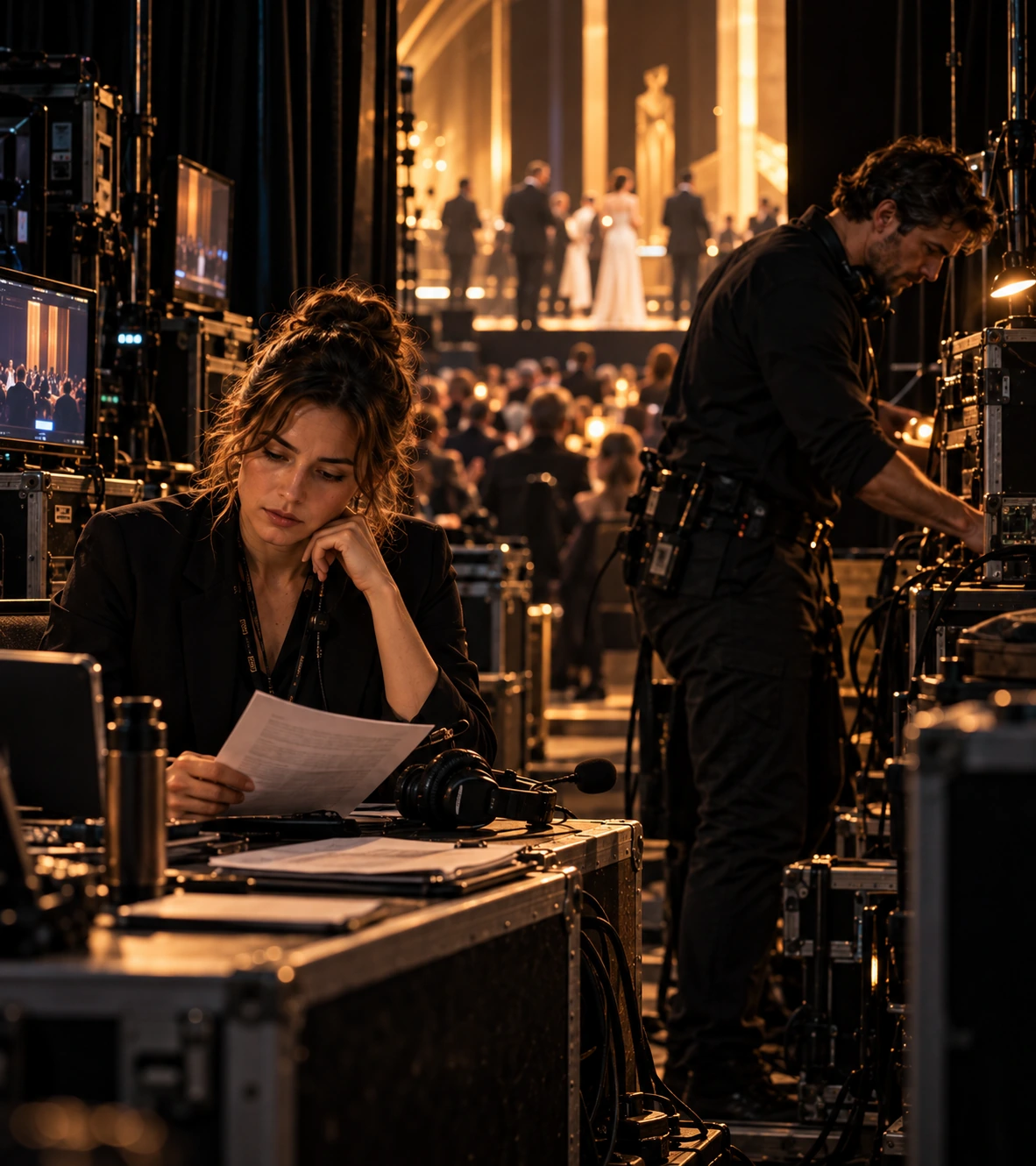
The project succeeds. Your name disappears.
For six weeks, you have worked on a difficult product launch. You identified reporting failures, redesigned the process, and helped two teams resolve problems that had delayed earlier releases.
Your manager presents the proposal at a leadership meeting. Senior leaders praise the solution. Your work is visible in the slides, but the account makes it sound as though your manager developed the solution alone.
You cannot tell how much was deliberate. Your manager coordinated the presentation and might believe they were speaking on behalf of the team. But the description could leave a reasonable listener with an inaccurate impression about who devised the proposal.
Your performance review is approaching. Recognition affects more than pride: it may shape the assignments, trust, and responsibilities you receive. You have messages, early drafts, and project records showing what you did. You also know that the launch depended on other colleagues whose contributions deserve recognition.
You could make a factual correction while the meeting is fresh. You could discuss it privately. Or you could document the work and choose a later point to raise the issue. Every option protects something and risks something else.
How do you reclaim recognition without claiming more than you contributed—or assuming you know why your manager left you out?
A story from history
Roman Empire · late 1st century CE
Pinning keeps chapter info in view on desktop. Unpinning returns it to the page flow. Chapter text always scrolls with the page.
This chapter scrolls with the page. Use the arrow keys or Page Up and Page Down to read. Press Tab to leave this reading area.
A poet whose words had another name
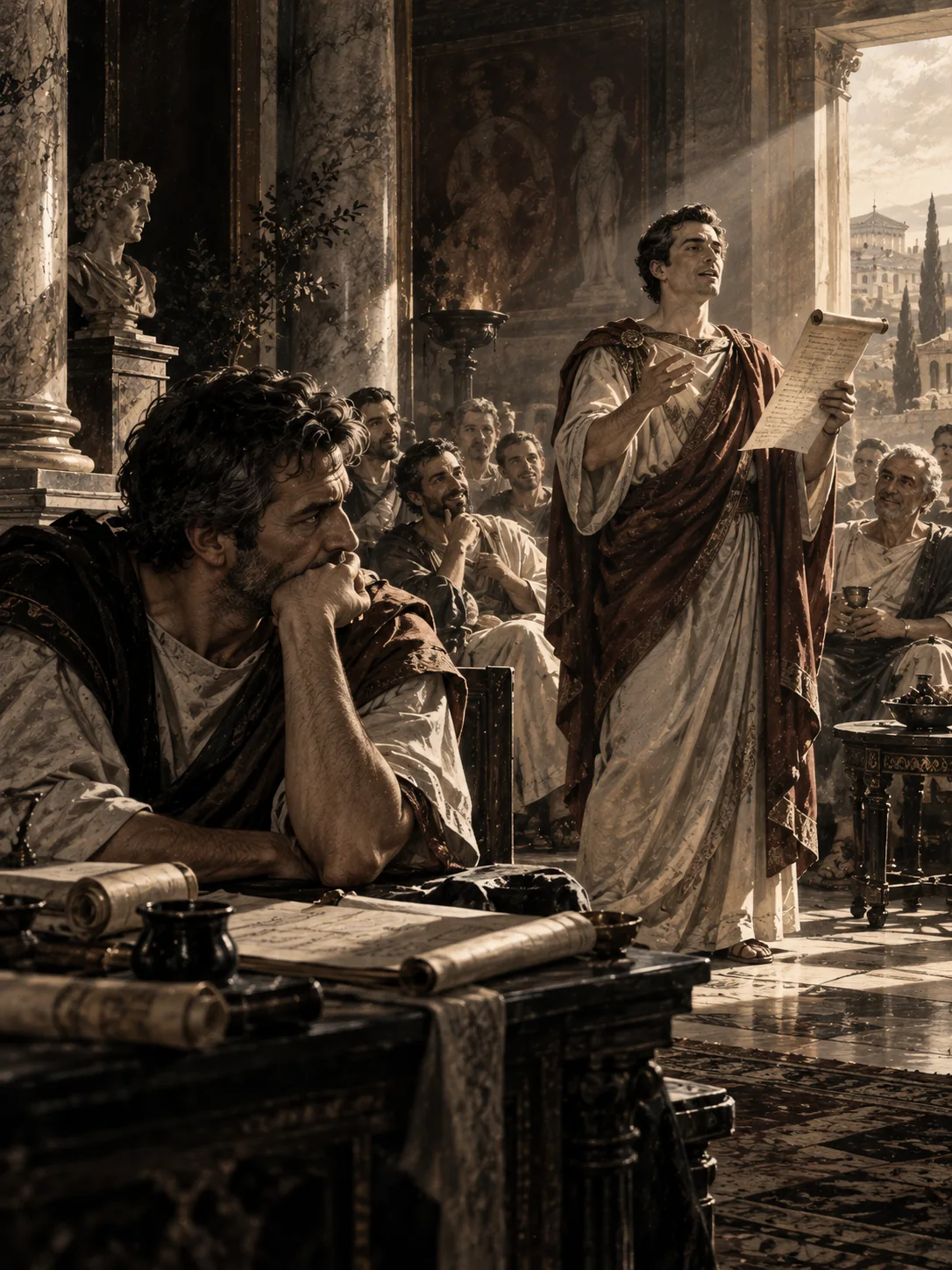
In first-century Rome, Martial wrote short, often cutting epigrams about social life, reputation, and the ways people sought public attention. Several poems in the first book of his Epigrams make the attribution of literary work a subject of satire.
In Epigram 1.29, Martial addresses Fidentinus, whom the poem portrays as publicly reciting Martial's verses as though they were his own. Martial turns the accusation into a joke about what it means to acknowledge the poet versus claim his words.
The distinction is useful: possessing a copy, giving a performance, and creating the words are not the same contribution. Yet the poem is a crafted satirical address, not an independently verified account of a particular confrontation. We cannot establish from it the identity, response, or actions of a historical Fidentinus.
The audience that could correct the story
In Epigram 1.52, Martial addresses Quintianus and asks for his help in defending the attribution of the poems. The poet imagines that another person's public acknowledgment could correct the audience's impression. The passage uses ownership and enslavement imagery that belongs to its Roman literary world, not to modern intellectual-property law.
A correction of authorship and a judgment about someone's character serve different purposes. A third party may be able to clarify who made the work without knowing all the motives behind a disputed claim. But this poem does not document a successful intervention: it imagines or asks for one.
When the work becomes evidence
Epigram 1.53 returns to Fidentinus and mocks a collection described as consisting mostly of Martial's verses, interrupted by a single page supposedly belonging to Fidentinus. This is a literary insult, not a surviving forensic examination of a historical manuscript.
Taken together, the poems offer three different rhetorical moves: challenge the claimed author, ask the audience to recognize the creator, and draw attention to the work. A modern workplace need not imitate Martial's ridicule to examine those distinctions.
The useful question is narrower than whether one person is a villain: what can help the relevant people understand who actually contributed what?
Epigrams 1.29, 1.52, and 1.53 document Martial's literary treatment of disputed attribution and his public poetic persona. They do not independently verify a real case involving a demonstrably identified Fidentinus or a successful resolution.
Reported statements, insults, and the audience implied by the poems are literary constructions. Do not reconstruct private motives, a documented meeting, or an ancient legal proceeding from them. Latin textual witnesses and historical translations may differ in wording.
The comparison with collaborative project work is editorial. Ancient literary authorship and modern credit within a team are not identical. A manager's delivery, coordination, or presentation may be genuine work even when a subordinate developed the underlying proposal. The question concerns accurate attribution, not exclusive ownership of a joint success.
Sources & Further Reading
- Ancient / historical source
Epigrams 1.29 (XXIX), 1.52 (LII), and 1.53 (LIII).
Historical English translation, not a modern critical edition. The satirical poems are not independent verification of a case involving Fidentinus.
- Modern scholarship
The Classical Quarterly 33.1 (1983), pp. 246–257; publisher extract and bibliographic record.
The accessible extract cautions against reading satirical epigrams directly as autobiography. The full article was not reviewed.
- Modern scholarship
The Encyclopedia of Ancient History; publisher abstract and bibliographic record.
Abstract only; the full entry was not reviewed. Literary persona and satire limit what can be inferred about the poet’s life.
Discover the lesson
Pinning keeps chapter info in view on desktop. Unpinning returns it to the page flow. Chapter text always scrolls with the page.
This chapter scrolls with the page. Use the arrow keys or Page Up and Page Down to read. Press Tab to leave this reading area.
“Recognition should follow the work as accurately as possible, even when many people helped make the work succeed.”
- i
Separate the work from the story told about it
Establish what happened before deciding why. What did you produce, which decisions were yours, and what did others do? What did your manager actually say, and what impression was likely left? Compare specific claims and omissions with records. You can have a strong case for recognition without proving deliberate malice.
- ii
Correct the record, not necessarily the person
Think about the people who need an accurate account: a manager, the project team, or those making a promotion decision. A factual correction can acknowledge the proposal's author, the person who presented it, and colleagues who carried out the launch. Careful wording should not become an excuse to leave a consequential false impression untouched.
- iii
Match the response to the stakes
A private conversation may obtain a correction with less conflict. A timely public clarification may matter if a decision is being made immediately. Documentation may be needed when career evaluation or compensation is affected. Choose the audience and timing based on evidence and consequences, not on a blanket rule that confrontation or silence is always best.
- iv
Build recognition into the work
Before future presentations, agree how to acknowledge analysis, design, coordination, and delivery. Keep practical records of decisions and contributions. Documentation is not a substitute for trust; it reduces dependence on someone's memory or willingness to speak on behalf of others.
Projects have multiple contributors, and a manager may take legitimate responsibility for a collective result. A presentation omission is not automatically plagiarism or intentional deception. Some settings involve retaliation or severe power imbalances, in which case private confrontation may not be safe or adequate. Modern attribution, labor protections, and copyright differ fundamentally from the social setting of Roman epigram. Do not adopt Martial's ridicule as a recommended workplace tactic, and do not treat his poetry as a legal case file.
Your decision
Choose what you would do. Each choice reveals a different perspective — none is simply right.
In a leadership meeting, your manager presents your proposal as their own. It is well received.