How Do You Recognize True Talent?
A lesson from Liu Bang
 TodayHistory
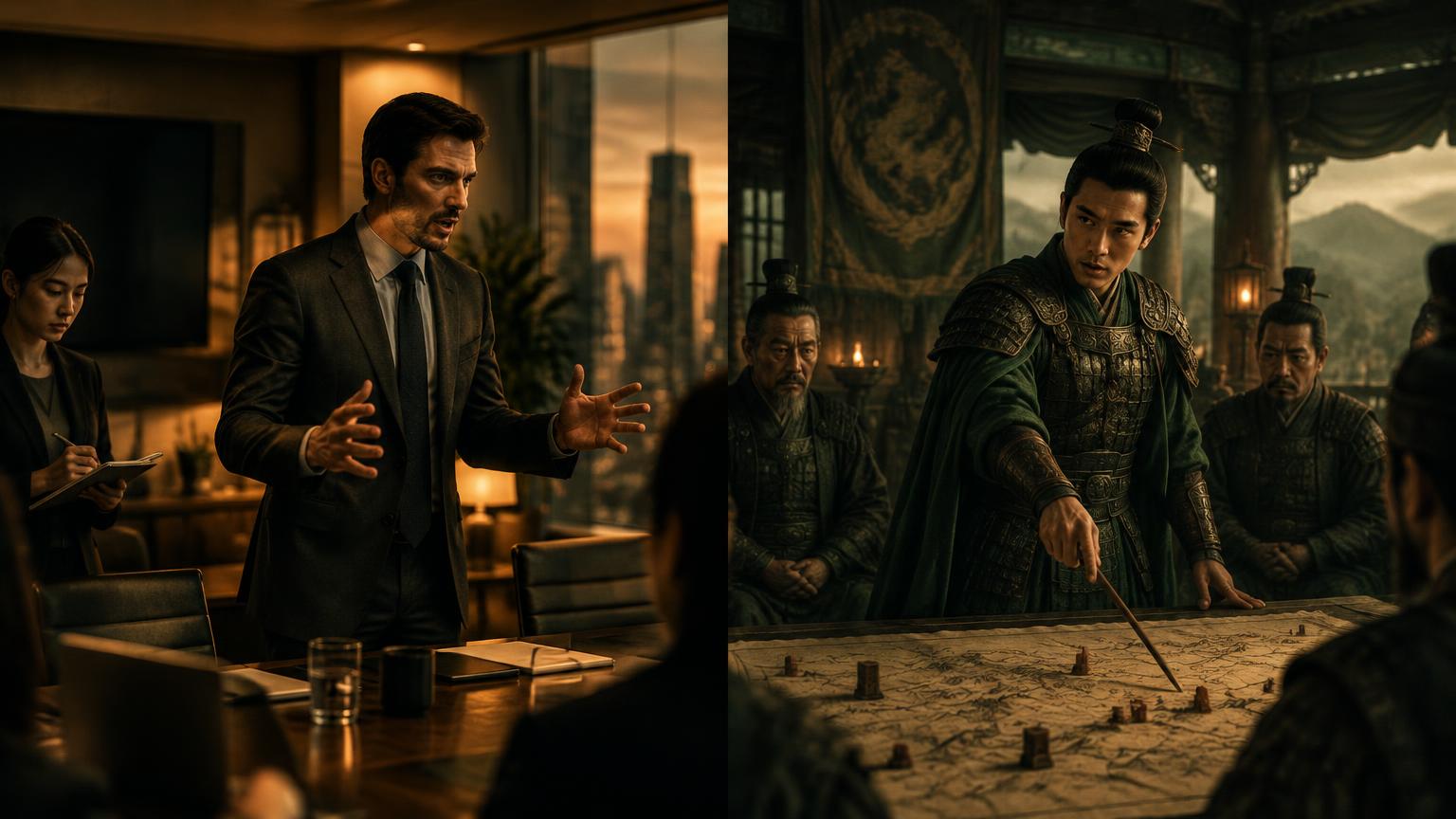
The modern dilemma
Pinning keeps chapter info in view on desktop. Unpinning returns it to the page flow. Chapter text always scrolls with the page.
This chapter scrolls with the page. Use the arrow keys or Page Up and Page Down to read. Press Tab to leave this reading area.
You oversee operations for a company whose customer onboarding keeps breaking down between teams. An analyst has traced several failures and proposed a clearer handoff. A senior colleague who worked alongside her recommends putting her in charge of the redesign. She has never led work across departments, and the team cannot afford another troubled launch.
Her analysis is promising, but diagnosing a problem is different from coordinating people who disagree about priorities. Her sponsor may have seen judgment that you have missed; they may also be extending a strong impression beyond the work they actually observed. The absence of a leadership record could reflect limited opportunity, limited readiness, or both.
You could give her a defined part of the project with real decision rights and support, recruit someone with a longer record, or postpone the appointment. A small assignment might reveal too little; a large one could put customers and colleagues at risk. You need to decide what opportunity would produce useful evidence and what the organization must contribute to make that opportunity real.
What would justify giving her greater responsibility, and how would you make that opportunity informative and fair?
A story from history
Chu–Han Contention · 206–202 BCE
Pinning keeps chapter info in view on desktop. Unpinning returns it to the page flow. Chapter text always scrolls with the page.
This chapter scrolls with the page. Use the arrow keys or Page Up and Page Down to read. Press Tab to leave this reading area.
Ability Without a Command
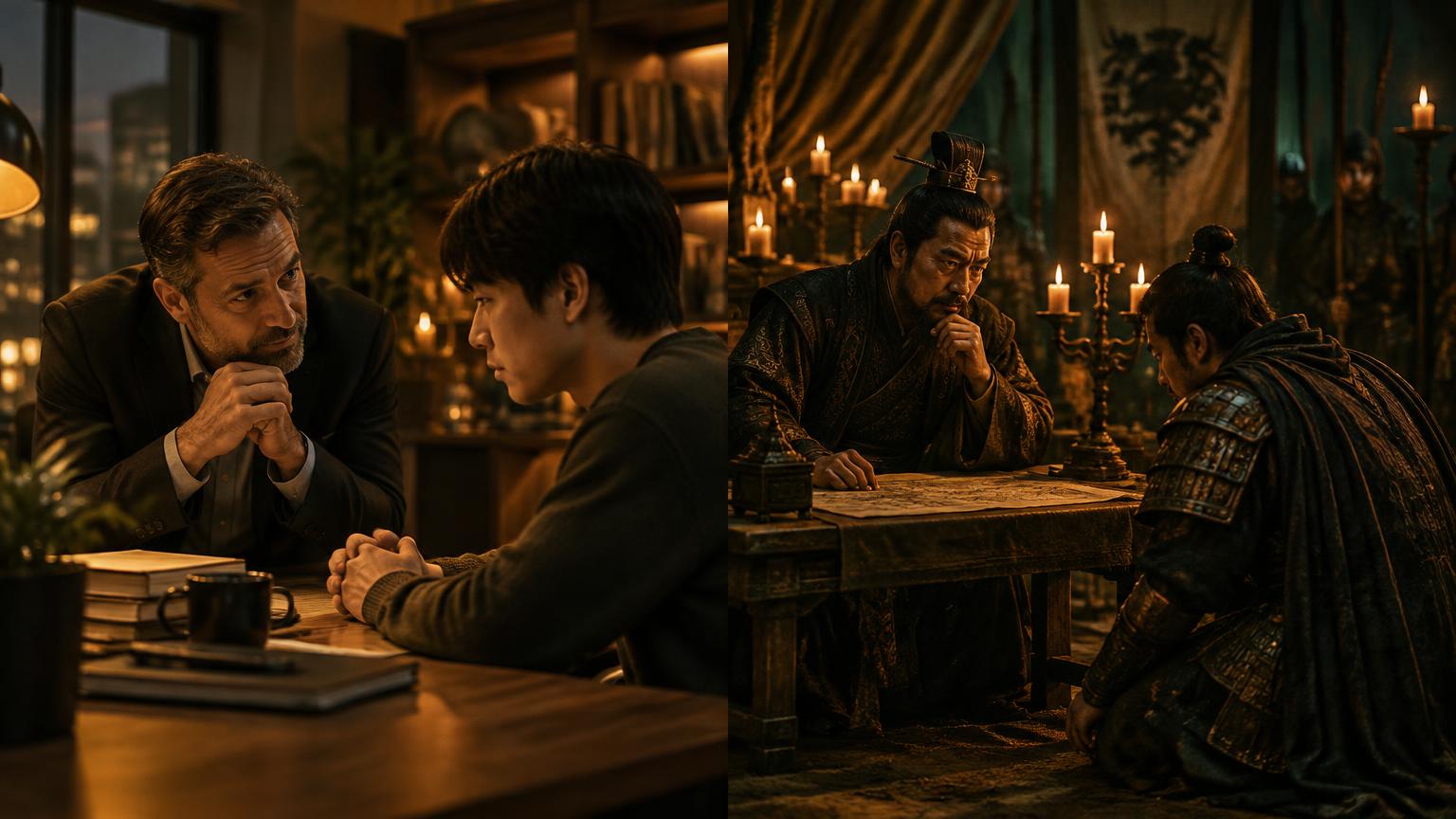
In the struggle following the fall of Qin, Liu Bang sought to challenge his rival Xiang Yu. Shiji 92, Han Xin's biography, describes Han Xin leaving Xiang Yu's service after his proposals went unused. In Liu Bang's camp, an earlier recommendation brought him a supply post, but the ruler remained unimpressed. Xiao He, Liu Bang's chief minister, then spoke with him repeatedly and considered him exceptional.
What had Xiao He recognized? The biography records that they spoke but not the substance of their conversations. It supplies no record of successful independent commands before the appointment. That is a limit of this account, not proof that Han Xin had accomplished nothing. His later reputation cannot fill the gap. The distinction matters: a person may lack visible achievements because earlier roles offered little scope, but lack of opportunity does not itself establish ability.
What a Recommendation Can Carry
The narrative says Han Xin left after recommendations failed to secure the role he sought. Xiao He pursued him and framed his appeal around Liu Bang's goal: holding Hanzhong would not require Han Xin; competing for the empire would. His reported argument makes suitability depend on the mission. It asks which capabilities the undertaking needs, rather than who is exceptional in general.
In the account, Liu Bang agrees to appoint Han Xin for Xiao He's sake. One reading is that trust in a recommender helped bridge a gap in the ruler's own assessment. But the text does not recover Xiao He's criteria or Liu Bang's full information. The recommendation may have been perceptive; the risk of losing a candidate also mattered in the narrated choice. Waiting could mean losing an opportunity; appointing him meant entrusting an army to a decision whose full basis we cannot reconstruct. Neither course was cost-free.
More Than a Title
Xiao He presses for appointment as great general rather than an ordinary general and insists on a formal ceremony. Shiji depicts the army's surprise at the choice. A useful distinction here is between recognition and authorization: Xiao He recommends; Liu Bang grants the role. The ceremony may give a newcomer public standing, but cannot establish competence or guarantee cooperation. The authority to act still needs support.
The biography places Han Xin's extended strategic discussion with Liu Bang after the appointment ceremony. It cannot serve as a documented pre-appointment test. The sequence does not prove that no earlier assessment occurred; it limits what this passage establishes. Command did not make Han Xin independent of the organization supporting him. Shiji 53 describes Xiao He supplying the armies and replacing losses.
Success Seen Backward
Shiji 92 later recounts victories in Wei and Zhao. These add evidence of performance after authority was granted; they could not settle the earlier appointment in advance. Chapter 8, after victory over Xiang Yu, presents Liu Bang crediting his use of Zhang Liang, Xiao He, and Han Xin. This retrospective explanation can illuminate complementary contributions without proving that he foresaw them all.
Success did not make delegation frictionless. Chapter 92 also recounts Han Xin requesting appointment as acting king of Qi and Liu Bang reacting angrily before making him king. Entrusting someone with consequential work can create bargaining power as well as useful results. This episode does not establish every motive or make ability a sign of disloyalty. It complicates the comforting picture of a leader merely discovering a finished talent. Recognition began a relationship whose authority, expectations, and risks still had to be managed.
Shiji 92 supplies the early career, recommendation, appointment, campaigns, and Qi episode used here. Chapter 53 records Xiao He's recommendation and logistical work; chapter 8 places Liu Bang's remarks about three talents after victory. These chapters belong to the same retrospective work, not independent confirmations.
Xiao He's pursuit, the appointment ceremony, and the speeches are already in Shiji 92. Their presence there does not independently authenticate the dialogue or reveal every assessment. The consulted passage does not specify a moonlit pursuit. This lesson invents no interview or pre-appointment work test.
Reading the appointment as a decision under uncertainty, and comparing it with a modern stretch assignment, are editorial interpretations. The text does not establish all available evidence, prove Xiao He's method, or show that authority alone caused success. Subsequent achievements cannot make the earlier decision risk-free.
Discover the lesson
Pinning keeps chapter info in view on desktop. Unpinning returns it to the page flow. Chapter text always scrolls with the page.
This chapter scrolls with the page. Use the arrow keys or Page Up and Page Down to read. Press Tab to leave this reading area.
“Recognizing potential means judging both the person and the opportunity.”
- i
Separate Access From Ability
Han Xin's unused proposals tell us about access to influence, not enough about the quality of every proposal. When someone lacks a leadership record, ask which decisions they have actually been allowed to make. Examine a concrete contribution, its reasoning, and its limits. If their current role cannot produce the evidence you need, consider a fair opportunity to gather it. Being overlooked warrants investigation, not automatic promotion.
- ii
Make the Recommendation Specific
Xiao He's advocacy linked Han Xin to the ambition of competing for the empire. Ask a sponsor which part of the proposed responsibility they have seen the person handle, what surprised them, and where their confidence ends. A useful recommendation makes an inference inspectable rather than asking you to borrow someone else's certainty. Seek another view when feasible, especially if the sponsor will benefit from the appointment.
- iii
Make the Opportunity Real
The appointment and ceremony changed Han Xin's standing; the supply system remained essential. For a modern stretch assignment, name the decisions the person owns, the support available, and the boundaries requiring approval. Choose work substantial enough to reveal judgment without transferring every risk at once. A role with too little authority may conceal the very ability you intended to assess. This is a modern option, not a claim that Liu Bang used a limited trial.
- iv
What the Opportunity Reveals
Han Xin's campaigns added evidence beyond the recommendation. For a modern assignment, ask which decisions the person owned, what support arrived, and what their work demonstrated or left untested. Expand authority when their work supports the next responsibility; adjust or narrow it when demands exceed demonstrated readiness. Success need not confirm every initial assumption. A setback calls for examining both decisions and conditions before deciding what opportunity should come next.
Overlooked does not always mean underestimated, and a sponsor's conviction is not a guarantee. A modern workplace is not an army in a struggle for power. Some responsibilities require demonstrated qualifications before delegation; learning cannot justify exposing others to unacceptable harm. Where a limited assignment is feasible, its scope, support, and evaluation should be fair to the person as well as the organization. Neither promotion nor caution proves that you have found, or failed to recognize, another Han Xin.
Your decision
Choose what you would do. Each choice reveals a different perspective — none is simply right.
Two candidates look identical on paper. One interviews brilliantly. The other is quiet but has a long record of steady results. You can choose only one.