When Love and Family Obligations Collide, Who Bears the Cost?
A lesson from the 1251 account of Trần Quốc Tuấn and Princess Thiên Thành


The modern dilemma
Pinning keeps chapter info in view on desktop. Unpinning returns it to the page flow. Chapter text always scrolls with the page.
This chapter scrolls with the page. Use the arrow keys or Page Up and Page Down to read. Press Tab to leave this reading area.
You want to marry the person you love, but the future you both want would unsettle promises your family has built around you. You and Sam plan to marry in four months. Now Sam has a job offer five hours away, with an answer due in a week. You would like to move, too.
You also promised your parent weekly grocery trips and household help for another six months. Your sibling cannot simply take over. Your family helped pay the wedding deposit and assumed you would stay nearby, although neither you nor Sam accepted that condition. You have not checked what other help is available or what travel and two homes would cost.
Everyone's concern can be understandable without every expectation becoming a claim over your future. Your parent may need reliable help. Sam may see an important opportunity. You may want both a shared home and a way to honor a promise. Wanting the same marriage does not settle where you will live or what either of you will freely undertake. Before making a decision, separate the choices each person owns from the commitments and practical work that remain.
When Love and Family Obligations Collide, Who Bears the Cost?
A story from history
Trần dynasty · 1251
Pinning keeps chapter info in view on desktop. Unpinning returns it to the page flow. Chapter text always scrolls with the page.
This chapter scrolls with the page. Use the arrow keys or Page Up and Page Down to read. Press Tab to leave this reading area.
A court changes the arrangement
The case comes from the Trần royal court of Đại Việt, in what is now Vietnam. Royal marriage operated within a world of kinship and political authority; it cannot be mapped directly onto the freedom of a modern adult couple. Research on noblewomen's political roles helps explain that setting without establishing what any particular woman privately wanted. (Nguyễn Thu Hiền, 2025, pp. 79–83)
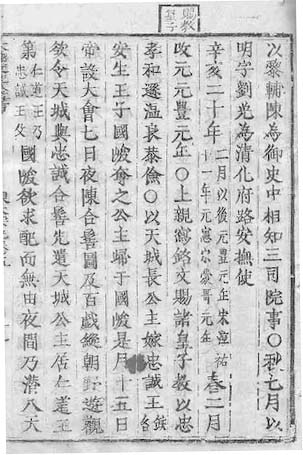
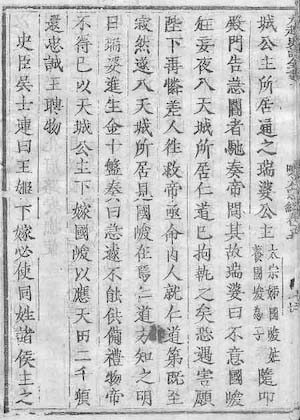
For 1251, the Đại Việt sử ký toàn thư records Thái Tông planning Princess Thiên Thành's marriage to Trung Thành Vương, son of Nhân Đạo Vương. Trần Quốc Tuấn entered her quarters at night; the annal reports sexual relations. Princess Thụy Bà, his adoptive mother, reported his detention; Nhân Đạo learned of it only when royal messengers arrived. Thụy Bà offered gold. Thái Tông changed the match and settled Trung Thành's betrothal gifts with land. (Toàn thư, Book V, 1251, folios 17a–17b)
That sequence does not give everyone an equal place in the record. An urgent report and the messengers' findings are different kinds of information. Their contrast permits questions about how royal intervention was secured; it does not establish a prior plan among the participants or recover their private motives. A ruler responding after the situation has changed faces a different decision from one considering an arrangement before anyone acts. We should not turn that difference into praise for creating a situation others must then resolve.
A settlement is not everyone's agreement
The property settlement keeps the displaced intended groom within the story. It provides a concrete reason to ask what a changed decision leaves for others to handle. Yet we cannot infer that material terms measured the whole cost, that Trung Thành accepted them willingly, or that anyone's feelings were repaired. Nor do we know whose use of the land changed. Inventing those consequences would add another story to the one we have.
The entry does not preserve Thiên Thành's statement of what she wanted. Neither the report of sexual relations nor the later marriage establishes her consent. That gap also cannot establish a refusal or a particular form of coercion. Reading responsibly means leaving the question open. A modern lesson can insist on consent without pretending that a medieval narrative has supplied evidence it does not contain.
There is a serious objection to making this a lesson about choice: the chronicler was concerned with court affairs and moral order, not answering a modern question about individual autonomy. The omission of someone's perspective need not prove a deliberate attempt to suppress it. It does, however, limit what we can learn from the account. We can examine the decisions and the settlement described while refusing to certify a love story or to decide what every participant experienced.
Later judgments require their own labels
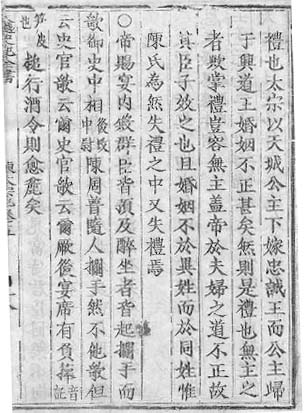
Ngô Sĩ Liên's appended criticism concerns marital ritual and same-clan marriage; it is later judgment, not Thiên Thành's testimony. (Toàn thư, folios 17b–18a) Modern discussions also disagree about her parentage. The VUSTA article's proposal and a later chronicle's identification, repeated in a 2025 study, need to be evaluated as different claims with different bases. This reading therefore specifies no aunt–nephew or cousin relationship. (VUSTA discussion), (Cương mục, Book VI, pp. 205–206), (Nguyễn Thu Hiền, p. 83)
Quốc Tuấn's later fame cannot resolve those evidentiary limits or justify an earlier personal decision. Here he is named as Trần Quốc Tuấn; the later designation Hưng Đạo Vương is not assigned to his position in 1251. The useful comparison is narrower: an authority can settle an arrangement without our knowing whether everyone affected has been heard. In the present, that distinction asks us to examine both a person's freedom to choose and the obligations a choice leaves unfinished.
The consulted annal is transmitted historical narration, not interviews with participants. Read the exact event passage and distinguish its commentary. (Đại Việt sử ký toàn thư, Book V, 1251)
Later genealogical identifications and moral criticism have their own dates, sources, and limits. They do not supply a missing personal account. (VUSTA discussion) (Cương mục, Book VI, pp. 205–206) (Nguyễn Thu Hiền, 2025)
The distinction between freedom to choose and responsibility for practical consequences is a bounded editorial comparison, not a recovered medieval rule of consent.
Sources & Further Reading
- Ancient / historical source
Folios 17a–18a
Vietnamese translation/transcription; exact edition details for this mirror are not established. Event and later commentary are separate layers.
- Ancient / historical source
Reading interface; relevant leaves 17a, 17b, and 18a
Classical Chinese scans and Vietnamese translation. The interface starts at an earlier folio; direct images below allow the relevant leaves to be inspected. Same chronicle, not another witness.
- Ancient / historical source
Book V, folio 17a; direct scan
Classical Chinese scan from the Nôm Foundation reading project. Same chronicle, not another witness.
- Ancient / historical source
Book V, folio 17b; direct scan
Classical Chinese scan from the Nôm Foundation reading project. Same chronicle, not another witness.
- Ancient / historical source
Book V, folio 18a; direct scan
Classical Chinese scan from the Nôm Foundation reading project. Same chronicle, not another witness.
- Source criticism & context
Discussion reposted by VUSTA; attributed to Xưa và Nay, issue 245, October 2005, pp. 10–12
Vietnamese; competing hypothesis, not scholarly consensus. Original issue not inspected.
- Ancient / historical source
Vietnamese PDF, printed pp. 205–206
Large whole-book PDF; later chronicle commentary and translator footnotes must be distinguished. Not a contemporary witness.
- Modern scholarship
Full article PDF, 2025, pp. 77–85; see pp. 79–83
Vietnamese body with English abstract; modern scholarship, not a newly discovered account of consent.
- Modern scholarship
Full article HTML, 2023, pp. 9–19
Russian body with English abstract; broader marriage-politics interpretation, not proof of the 1251 participants' motives.
Discover the lesson
Pinning keeps chapter info in view on desktop. Unpinning returns it to the page flow. Chapter text always scrolls with the page.
This chapter scrolls with the page. Use the arrow keys or Page Up and Page Down to read. Press Tab to leave this reading area.
“A choice can be yours to make while its practical consequences still require your attention.”
- i
Separate consent from the commitments around it
Marriage, a shared home, and continued participation in a relationship require the people involved to choose for themselves. A financial contribution or a promise of help does not give someone else ownership of that choice. But separate commitments still deserve a clear account: what did you promise, to whom, for how long, and under what conditions? Your promise to help a parent is not automatically Sam's promise. A relative's assumption that you will stay nearby is not the same as an agreement you made. Gratitude gives you a reason to acknowledge help; it does not define every future obligation.
- ii
Name the cost before passing it along
The historical settlement directs attention to something a romantic ending might omit: other people are left with consequences to resolve. In your own decision, identify the actual tasks, money, timing, and inconvenience rather than assuming that everyone will adjust. Your sibling's time cannot be assigned without asking. A paid service is not a workable plan until you know its availability, cost, and what your parent is willing to accept. Offer what you can genuinely do, and say what remains uncertain. Dealing with costs does not buy permission to override anyone's choice, including your own.
- iii
Make a proposal people can decline
A temporary arrangement can be useful when it tests a real uncertainty. It can also prolong a conflict or require sacrifices someone never freely accepted. Discuss what living apart, staying, or moving would actually involve; agree on a review point and what happens if one person wants to stop. You do not need unanimous family approval to make an adult decision. You do need to avoid announcing another person's participation as a settled fact. Sometimes no shared plan is acceptable to both partners. Responsibility may then mean an honest ending and practical follow-through, rather than a promise that love will make every cost disappear.
This example assumes adults who can disagree and leave safely. Threats, confinement, forced marriage, or control that prevents a real refusal change the situation; negotiation is not an adequate answer to every exercise of coercion. Independent support and a safer way to make decisions may be needed. Neither royal marriage in thirteenth-century Đại Việt nor this hypothetical household represents all Vietnamese or American families. Specific obligations need examination on their own terms; the comparison does not assign anyone a right to another person's relationship.
Your decision
Choose what you would do. Each choice reveals a different perspective — none is simply right.
Return to the wedding, the offer, and the promise to your parent. You have one week to clarify a plan that other people must be free to accept or decline. Which support is genuinely available? What can you and Sam afford? Which expectation was never agreed to, and which undertaking is actually yours?
You could propose moving together with credible replacement help, postponing the wedding while trying separate cities, or staying nearby if that is a future you both freely want. You could also end the engagement. These choices carry different losses. You do not have to prove that one person is wrong or exhaust every compromise before withdrawing consent to marriage. At the same time, bookings, belongings, and promises of practical help do not vanish because the relationship changes.
Choose a response in the companion scenario, then compare what each option protects, what it risks, and what information could change your judgment. The purpose is to understand the responsibility that remains after a choice, not to award a perfect outcome.
You and Sam, both adults, plan to marry in four months. Sam has a job offer in a city five hours away and must answer in a week. You would like to move, too. You also promised your parent weekly grocery trips and household help for another six months. Your sibling helps on other days but has said they cannot take on your share. Your parent wants you nearby, and you have not yet explored which other arrangements would meet their needs. Your family paid part of the wedding deposit and assumed you would stay close, but neither you nor Sam accepted that as a condition. Some money may be lost if the wedding is postponed. You and Sam still want a future together, but have not agreed on the move, a period living apart, or how much family support each can freely undertake. You can disagree safely. You do not yet know the availability of other help, the budget for travel or two homes, or what either of you would choose if no shared plan fits.