What Happens When You're No Longer Needed?
A lesson from Fan Li
 TodayHistory
The modern dilemma
Pinning keeps chapter info in view on desktop. Unpinning returns it to the page flow. Chapter text always scrolls with the page.
This chapter scrolls with the page. Use the arrow keys or Page Up and Page Down to read. Press Tab to leave this reading area.
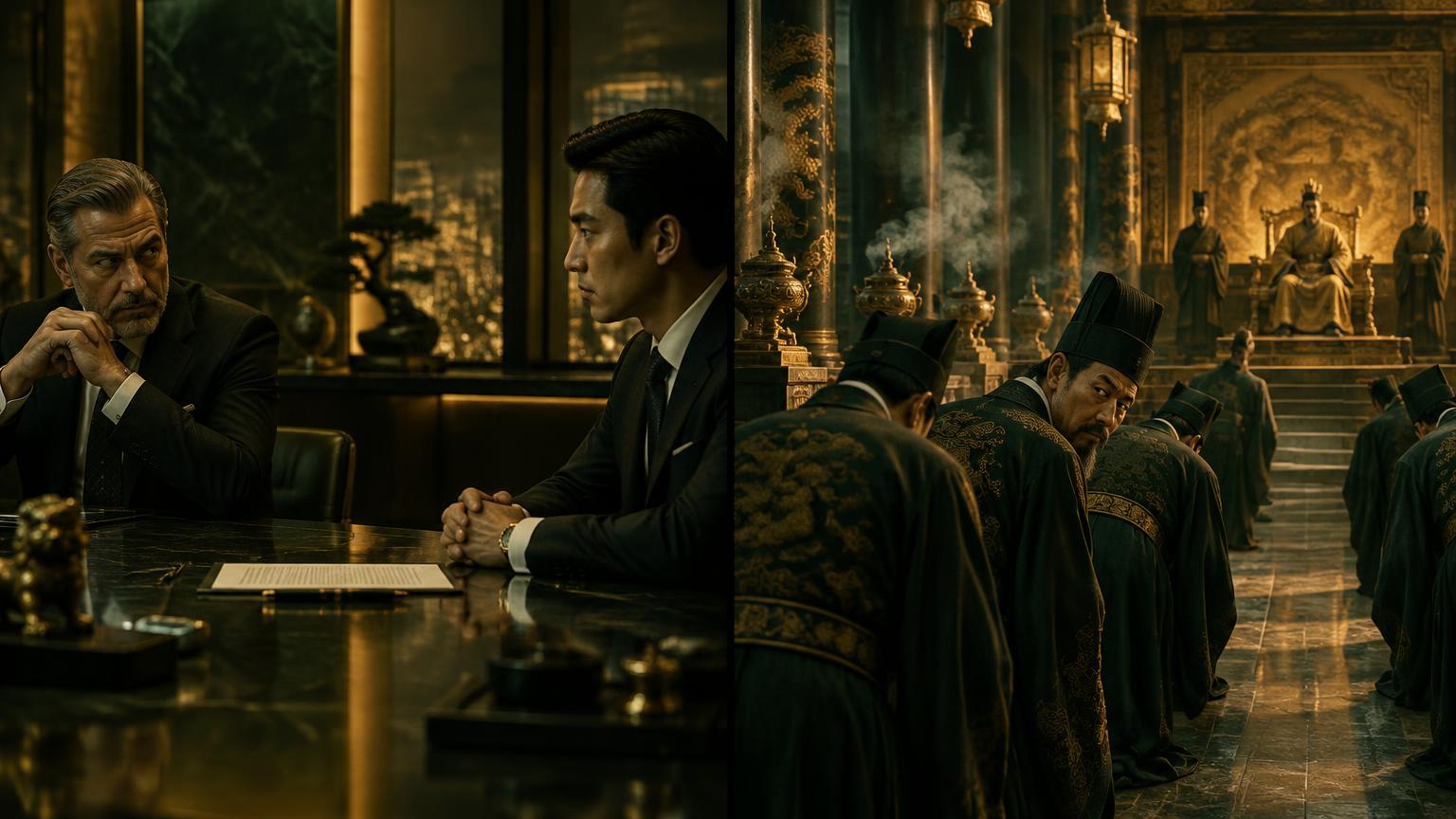
The meeting invitation reaches you through a forwarded email. It concerns the project you have led for two years, but the decision has already been made. Someone else will present the plan. You read the message again, looking for an explanation that is not there.
During the company's hardest months, people called you when a customer threatened to leave or a launch went wrong. You knew the fragile parts of the business because you had helped hold them together. Now revenue is steady, new managers have arrived, and conversations you once shaped happen without you.
There may be a reasonable explanation. A growing company needs different roles. Your manager may be reorganizing the team, sharing authority, or handling a transition badly. But the uncertainty has a cost: you keep doing the work while wondering whether anyone still expects you to lead it.
You want your contribution recognized without treating every change as an insult. You also do not want gratitude for the past to substitute for an honest agreement about the future. Before deciding whether to stay or leave, you need to understand what has actually changed.
If the organization no longer needs you in the same way, what would make a different role worth choosing?
A story from history
Wu–Yue rivalry · 494–473 BCE
- 494 BCE
Yue's defeat
- The Recovery
Rebuilding Yue
- 473 BCE
Victory over Wu
- After Victory
Diverging paths
Pinning keeps chapter info in view on desktop. Unpinning returns it to the page flow. Chapter text always scrolls with the page.
This chapter scrolls with the page. Use the arrow keys or Page Up and Page Down to read. Press Tab to leave this reading area.
The Historical Problem
In 494 BCE, Yue, a state in southeastern China, faced a problem of survival after defeat by its neighbor Wu. King Goujian and his remaining forces were surrounded at Mount Kuaiji. The Shiji, compiled centuries later, presents Fan Li counseling negotiation and Wen Zhong carrying it out. It describes Goujian's austere living, associates Wen Zhong with domestic government and Fan Li with military affairs, and connects recovery with economic management and support for warriors. Different abilities served a shared emergency.
By 473 BCE, Yue had conquered Wu. Shiji 41 then describes Goujian asserting wider regional standing. Defeating Wu had been a shared objective; governing after victory still required work, but it did not automatically give each adviser the same role.
One reasoned interpretation is that a common danger can align interests without settling them permanently. Recovery gave ruler and advisers an urgent reason to cooperate, while questions of future status, influence, and reward could remain unresolved. When the immediate enemy disappeared, those questions could become harder to avoid.
The Decisions
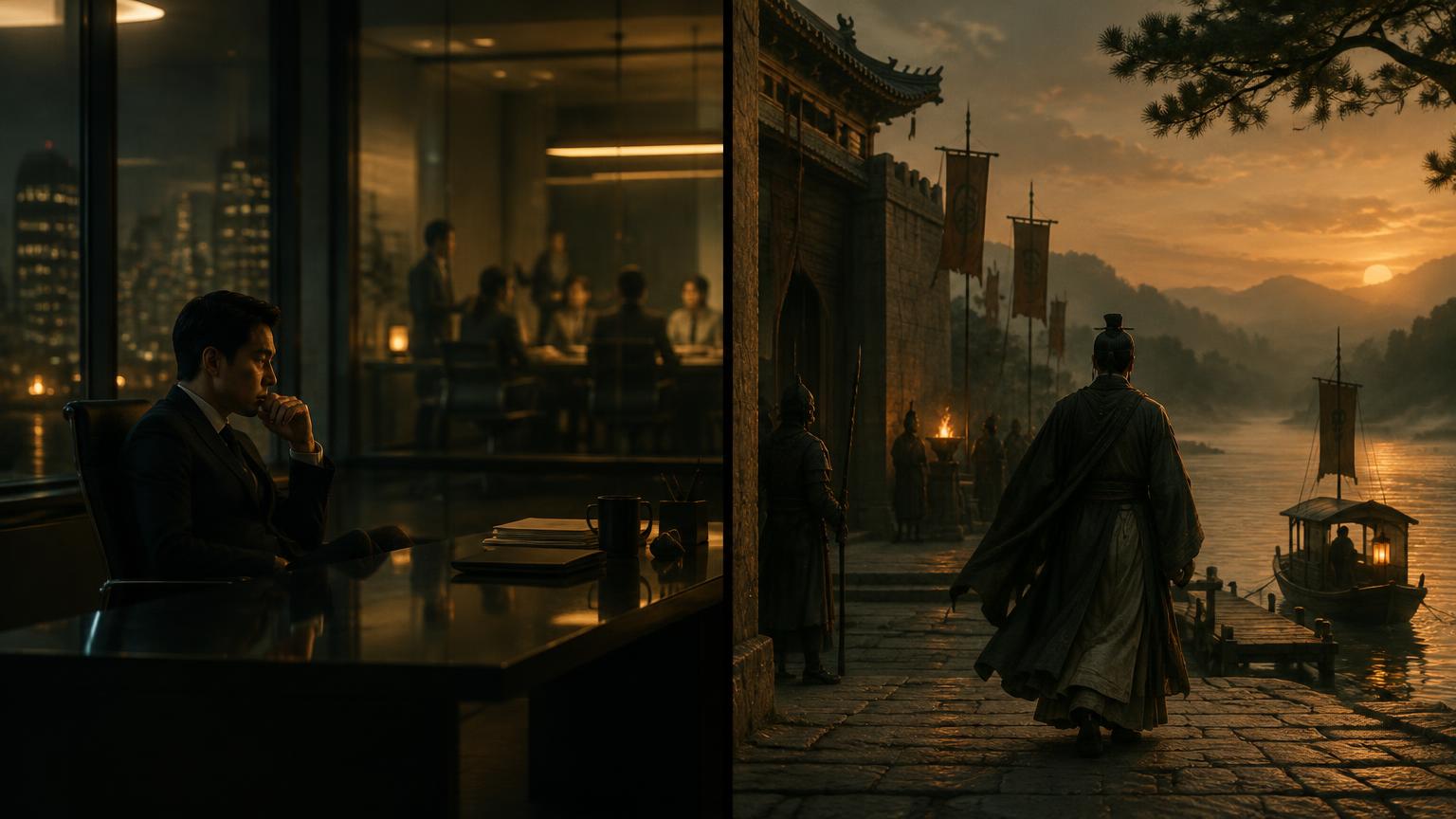
In its Fan Li section, Shiji 41 portrays him doubting whether great distinction could be held safely and whether Goujian could share settled times as readily as hardship. The departure scene places an offer of shared rule beside a threat of punishment. The warning letter to Wen Zhong is presented as sent from Qi after Fan Li left; it is not a separate, earlier confirmation of what he knew.
A strategic reading is that departure traded rank and access for less dependence on one ruler's favor. A reward and the freedom to refuse it are different kinds of security. The Shiji describes Fan Li leaving by boat with portable valuables and followers, resources that make exit more concrete than an act of will. He also surrendered years of accumulated standing for an uncertain future.
Wen Zhong remained in Yue, but the same account says he claimed illness and stopped attending court after receiving the letter. He changed his participation without leaving the state. Remaining might have preserved meaningful work, or departure might have been harder for him. The text does not establish that he had Fan Li's resources, freedom of movement, or alternatives. Two people can face the same political transition without facing the same choices.
The Price of the Decision
The account says someone accused Wen Zhong of rebellion, Goujian sent him a sword, and he died by suicide. Remaining in Yue preceded that outcome; chronology alone does not establish why it happened. The text does not establish Wen Zhong's guilt or show what another choice would have achieved.
Shiji 41 portrays Fan Li building wealth in Qi, becoming a minister, then returning his seal of office before moving to Tao, where he became known as Tao Zhugong. The episode invites a further reading: a rewarding position can still be reconsidered. This is an interpretation, not proof of his private motives. Chapter 129 connects his commerce with abilities previously used in statecraft; resignation alone does not explain his wealth.
These two careers are a contrast selected by the narrative, not a record of every adviser who stayed or left. They cannot tell us how often either choice succeeded. To assess a decision, consider the information, feasible alternatives, and costs at the time. A good outcome does not retroactively remove uncertainty; a terrible one does not establish that a safer option was available.
The Deeper Perspective
For this comparison, competence concerns what a person can do; office concerns the position and access a ruler grants; power concerns who can shape decisions and enforce them. Loyalty concerns commitments, while interests concern what each person stands to gain or lose. These can support one another without being interchangeable. A capable, committed adviser could still depend on permission to act.
For a modern reader, the useful question is whether a relationship can support its next task. Appreciation can be sincere while responsibilities remain unsettled. A different role can be worthwhile if its purpose and authority are clear; a generous title can still leave someone accountable for decisions they cannot influence.
The Zuozhuan records Yue's defeat by Wu and later conquest of Wu. Shiji chapters 41 and 129 supply the accounts of the advisers and Fan Li's later career used here. These are transmitted ancient texts, not contemporary records of private conversations.
The warning letter, departure scenes, and sword episode are already in the Shiji's historical narrative. Their presence in that text does not independently authenticate the letter or every detail. Later retellings add material; this lesson does not use the romance involving Xi Shi or a three-year captivity story.
Connecting changing court relationships with a modern career is an editorial analogy. It does not establish a universal rule about leaders, prove Wen Zhong misjudged his options, or make a colleague's changed behavior evidence of betrayal.
Discover the lesson
Pinning keeps chapter info in view on desktop. Unpinning returns it to the page flow. Chapter text always scrolls with the page.
This chapter scrolls with the page. Use the arrow keys or Page Up and Page Down to read. Press Tab to leave this reading area.
“The value of a contribution and the security of a position are not always the same thing.”
- i
Past Contributions Are Not Future Guarantees
Yue's victory changed the task without erasing the advisers' contributions. Ask which responsibilities still require your strengths and whether you actually want them. Recognition and a useful future role are related, but they are different conversations. Describe the next problem you could solve and why your experience fits it. If neither side can identify that work, praise alone has not established a future role.
- ii
Evidence Before Motives
Fan Li's warning is the narrative's judgment of Goujian, not independent access to the king's intentions. Note which decisions, meetings, or responsibilities have moved, when that happened, and whether a pattern is developing. Look for evidence that could challenge your explanation as well as support it. Compare a reorganization affecting several roles with repeated exclusion from work you still own.
- iii
Turn Uncertainty Into a Conversation
In Fan Li's departure scene, promised status coexists with the power to punish refusal. In a modern role, ask who owns which decisions, what success means, and when the arrangement will be reviewed. A reassuring answer matters less than whether the agreed responsibilities and follow-up actually occur. Ask what resources and authority accompany the assignment. Accountability without influence over the outcome is different from a smaller role with workable terms.
- iv
Build Options Before You Need Them
Fan Li's portable resources matter: resolve alone does not make an exit feasible. Assess what another role would require, reconnect with trusted contacts, and identify the skills you could use elsewhere. Preparation should not become a reason to neglect your work or avoid a conversation that could repair the situation. An option is useful only if you can exercise it: consider the time, income needs, and obligations a transition would involve.
- v
Choose by Conditions, Not Fear
The two advisers' different endings alone do not reveal what each could know beforehand. Staying may make sense when there is a credible role and commitments are honored. Negotiation may help when expectations conflict but discussion remains constructive. Moving on may be reasonable when exclusion persists, agreements fail, or a better-fitting opportunity exists. Set a review date rather than waiting indefinitely. Waiting may reveal information while also consuming time or narrowing alternatives. Record your evidence, assumptions, and reasons to reconsider, so a later outcome does not become your only measure of the decision.
A modern workplace is not an ancient court. Reorganization, a new manager, budget constraints, or a legitimate performance concern can explain reduced responsibility. This narrative cannot diagnose your employer's intentions. Use it to ask better questions, then weigh present-day evidence, commitments, and constraints. Neither staying nor leaving makes you the wiser character in someone else's story.
Your decision
Choose what you would do. Each choice reveals a different perspective — none is simply right.
You helped build a company. Your responsibilities are now being reduced, and nobody has explained why.