When Should You Question Loyalty?
A lesson from the imperial court
 TodayHistory
The modern dilemma
Pinning keeps chapter info in view on desktop. Unpinning returns it to the page flow. Chapter text always scrolls with the page.
This chapter scrolls with the page. Use the arrow keys or Page Up and Page Down to read. Press Tab to leave this reading area.
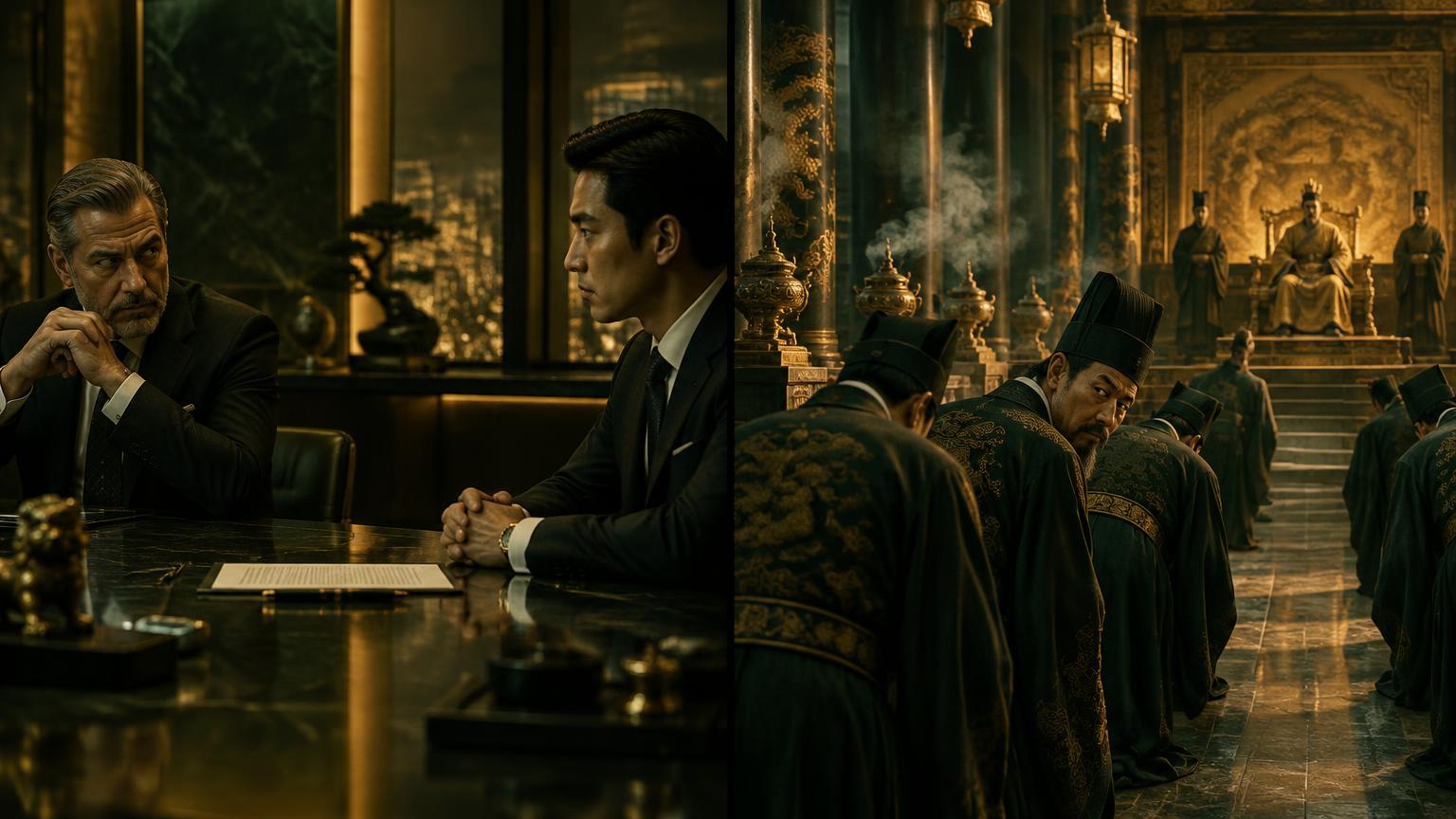
You and a longtime business partner run a small consumer-products company. A major customer now needs faster deliveries, while margins are tightening. Your partner has switched a supplier without telling you and has begun taking calls privately. You have handled key supplier decisions together in the past, but neither of you has defined which changes require advance agreement.
The new supplier appears cheaper. You do not yet know whether quality was checked, why the change was urgent, or whether there is any personal connection. Your partner has carried the business through difficult periods; that record matters, but it cannot answer these questions. A missed disclosure might be a breach of an understanding, a reasonable emergency decision, or a sign that you no longer share the same expectations.
You need to protect customers and the partnership without treating uncertainty as guilt. A public accusation could harden the conflict before the facts are clear. Avoiding the conversation could leave you responsible for commitments you cannot see or influence. Before asking whether your partner is loyal, you need to establish what each of you believed the partnership required.
Which commitment might have been broken, what would count as evidence, and how could both of you challenge the conclusion?
A story from history
Southern Song · 1142 CE
Pinning keeps chapter info in view on desktop. Unpinning returns it to the page flow. Chapter text always scrolls with the page.
This chapter scrolls with the page. Use the arrow keys or Page Up and Page Down to read. Press Tab to leave this reading area.
Service and the Right to Decide
In the early 1140s, the Southern Song court faced the Jurchen-led Jin in northern China. General Yue Fei sought to recover lost territory; Emperor Gaozong and his chief minister, Qin Hui, pursued a settlement. The later Songshi records Yue's battlefield successes, but its accounts do not make the relationship a simple contrast between a loyal soldier and a ruler who disliked success.
The court annals in Songshi 29 record Yue declining an initial instruction to withdraw in 1140, then returning after repeated orders later that summer. His biography in volume 365 emphasizes his objections and eventual withdrawal. Compliance and agreement were different matters in this account. Yet confidence in a campaign did not settle who could determine the state's policy, and returning on one occasion does not resolve every question about his conduct.
In 1141, the court moved three leading generals into central military offices and abolished their regional command agencies. This was broader than Yue's removal alone. Historian Charles Hartman interprets the conflict through Gaozong's effort to restore control over armies. That is a serious institutional explanation, rather than proof of any criminal charge. Concern about command can be real without making every measure taken in its name justified.
When a Dispute Becomes an Accusation
Later in 1141, Yue lost his central post and was imprisoned as peace negotiations continued. Songshi 365 describes allegations that he had failed to provide military aid in the Huai River region and that letters implicated him and his son in a plan to restore his command. The biography says the supposed letters had been burned and portrays the prosecution as fabricated. These are its account and judgment, not findings from an independently preserved trial file.
The biography supplies a more specific warning than a general claim about suspicion. It says the first investigator, He Zhu, found no supporting evidence and was replaced. It then describes pressure on witnesses and the rearrangement of marching dates to sustain an accusation of delayed obedience. If an inquiry cannot accept evidence against its premise, the authority conducting it can turn an unresolved charge into an apparently settled verdict. That mechanism is an interpretation of the narrative, not access to every participant's intentions.
Distinguish the questions being joined together. Was a military policy sound? Had an order been breached? Did the evidence establish a plot? One answer cannot simply stand in for the others. Past service does not exempt a commander from accountability, but a conflict over strategy or authority does not itself establish betrayal. Nor does the biography's defense of Yue establish that continuing his offensive would have succeeded. A possible political explanation for removing a commander is not the same as evidence supporting his prosecution.
What the Later Verdict Cannot Settle
The annals record an imperial order for Yue's death at the end of the eleventh Shaoxing year, corresponding to early 1142 in Western dating. The biography emphasizes Qin Hui's intervention; that emphasis does not erase the emperor's recorded authority. Yue was later rehabilitated, and his grandson Yue Ke organized material defending him. Songshi, compiled under the Yuan dynasty in the fourteenth century, preserves a tradition shaped by that defense and later commemoration. Its chapters are not independent confirmations of every charge, speech, or motive.
Later honor cannot tell us everything Yue or the court knew before the decision. Nor should this become a modern story about choosing a nation over a ruler: Yue Du's study of his changing image cautions against imposing that opposition on the earlier dynastic tradition. The useful comparison is narrower. Before judging loyalty, identify the commitment, the authority claimed over it, and how a disputed breach can be examined. Trust is difficult to assess when one party can redefine the obligation and close the inquiry.
Songshi 29 supplies the sequence of recall, command reorganization, imprisonment, peace agreement, and death order. Volume 365 supplies the allegations and its judgment that the case was fabricated. These are parts of one later dynastic history, not an independently verified trial record. Charles Hartman offers an institutional interpretation of the conflict.
Yue's biography records later rehabilitation and his grandson's work defending him. Family advocacy and commemoration helped shape the surviving tradition; that does not make all its material false. Yue Du studies the later image of loyalty, not a complete reconstruction of the prosecution. This lesson does not use the tattoo or reconstructed dialogue as proof of character.
The distinction between disputed authority and evidence of betrayal is editorial analysis. The sources do not establish every private motive, isolate one cause of Yue's death, or prove that further campaigning would have succeeded. Comparing the inquiry with a business disagreement does not equate their powers, dangers, or available protections.
Discover the lesson
Pinning keeps chapter info in view on desktop. Unpinning returns it to the page flow. Chapter text always scrolls with the page.
This chapter scrolls with the page. Use the arrow keys or Page Up and Page Down to read. Press Tab to leave this reading area.
“A dispute over a commitment is not, by itself, proof of betrayal.”
- i
Name the Commitment
Yue's case joins questions about a campaign, obedience, and control of an army. In a partnership, identify which obligation is actually at issue: disclosure, shared approval, a delivery promise, or a boundary on independent decisions. Ask what each person understood before the disputed action. A reasonable expectation is not automatically a shared agreement. Clarify future rules without pretending they were already in force. Self-interest can coexist with honoring a commitment; the relevant question is what someone did and whether it crossed an identifiable obligation.
- ii
Protect the Work Without Deciding the Character
The court's command problem and its criminal allegations require separate judgments. Likewise, you may need to check a supplier's quality, pause a new commitment, or review a specific transaction before you know why a partner acted. Make a safeguard proportionate to the observable risk and explain its purpose where possible. Past reliability does not remove the need to investigate a material change. But a temporary check should not silently become punishment or proof that the person is untrustworthy. Revisit it as the facts become clearer.
- iii
Let the Judgment Be Challenged
The reported replacement of an investigator matters because evidence can lose its corrective role when only one conclusion is acceptable. State the concern specifically, seek the other person's explanation, and look for information that could weaken your interpretation. When stakes justify it, agree on someone both parties can trust to examine the disputed action. An explanation may change your view or leave a breach unresolved; neither reassurance nor suspicion should settle it alone. This requires a workable process, not endless debate or a demand to prove inner loyalty.
A business partnership is not an imperial court. Some commitments are explicit, some breaches are well supported, and urgent risks may require action before intentions are clear. Confidentiality, routine delegation, or a poorly communicated exception can explain changed behavior; they do not excuse every undisclosed decision. Do not demand proof of a person's inner loyalty or use past service to dismiss present evidence. If one party cannot question an accusation safely, a direct conversation alone may be inadequate. This case offers questions for examining a disputed obligation, not a formula for deciding whom to trust.
Your decision
Choose what you would do. Each choice reveals a different perspective — none is simply right.
Your business partner has started taking calls privately and changed a supplier without telling you. Nothing is clearly wrong, but your trust is shaken.